Every year, millions of people waste money on wireless headphones that break within months, sound terrible, or refuse to hold a charge. The frustration is real, and the financial loss adds up quickly. If you want to avoid bad wireless headphones, you must shift your mindset from “cheapest option” to “best value for your needs.” A bad purchase often happens when you prioritize price over performance, aesthetics over durability, or brand hype over verified reviews.
The Difference Between a Good Deal and a Trap
A good deal saves you money on quality. A trap costs you less upfront but forces you to replace the headphones within weeks. Common traps include heavily discounted no-name brands with fake 5-star reviews and products that look identical to premium models but use cheap plastic drivers. Learning to spot these traps is the first step toward making a purchase you will actually enjoy for years.
What Defines a Quality Wireless Headphone in 2025?
Sound Signature and Driver Quality
Quality wireless headphones deliver balanced audio with clear mids, crisp highs, and controlled bass that doesn’t overpower everything else. Look for headphones with at least 40mm dynamic drivers for over-ear models or 10mm drivers for earbuds. Brands that publish their frequency response curves are generally more transparent and trustworthy.
Battery Life That Matches Your Lifestyle
Good wireless headphones should offer at least 20 hours of playback on a single charge for over-ear models and 6 hours for earbuds. Any product claiming less than that is already behind the curve. Premium models now reach 40 to 60 hours with ANC off. Pay attention to charging speed and whether the case supports wireless charging.
Build Materials and Durability
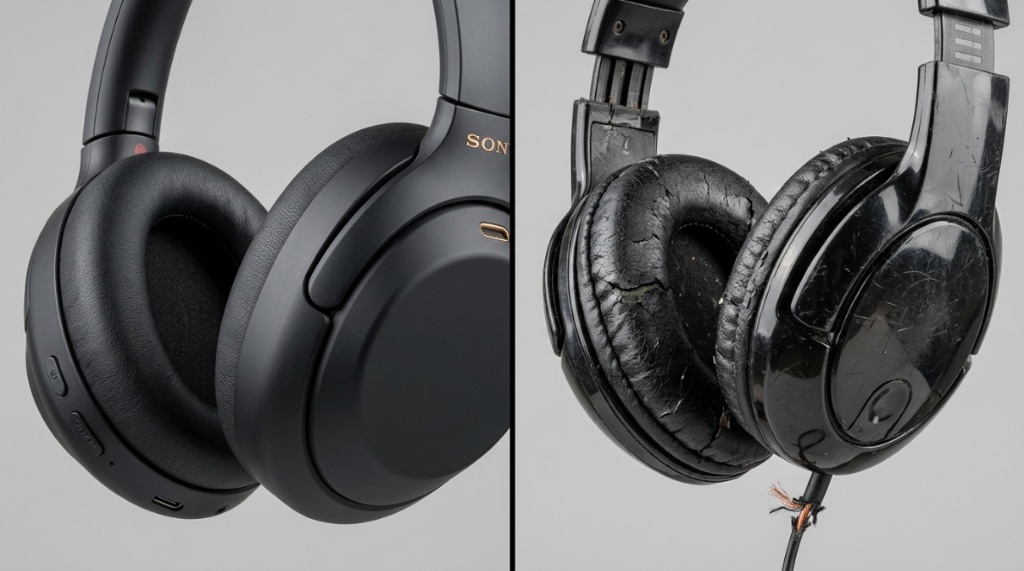
Cheap plastic cracks, headbands snap, and ear pads peel within months. Quality headphones use reinforced polycarbonate, metal hinges, and memory foam ear cushions wrapped in protein leather or breathable mesh. If the product images show glossy, thin plastic with visible seam lines, proceed with caution.

How Can You Spot Fake Reviews Before Buying?
Red Flags in Customer Feedback
Fake reviews often share the same patterns: overly generic language, five-star ratings with zero context, and an unnatural number of reviews posted on the same day. Look for verified purchase badges and check the “most recent” tab rather than the default “top reviews” section. Real buyers mention specific pros and cons, not just praise.
Tools to Verify Authentic Ratings
Use browser extensions like Fakespot or ReviewMeta to analyze review patterns before purchasing. These tools detect suspicious review clusters and exaggerated ratings. A product with 4.8 stars but only 50 reviews is less trustworthy than one with 4.2 stars and 10,000 verified reviews.
Spotting Review Manipulation on Social Media
Influencer reviews are not always honest. If every creator uses the exact same script or highlights the same three features without mentioning flaws, the brand likely sent free units with a positive-review requirement. Seek out reviewers who bought the product themselves and show real usage footage.
Which Features Actually Matter for Everyday Use?
Active Noise Cancellation vs. Passive Isolation
Active noise cancellation (ANC) uses microphones to cancel ambient sound electronically. It is essential for commuting, open offices, and travel. Passive isolation relies on the physical seal of ear cups or ear tips. If you work in a quiet home environment, good passive isolation may be enough, saving you money and avoiding ANC-related audio artifacts.
Codec Support and Wireless Range
Basic SBC codec works for most users, but if you stream from an Android device, look for aptX or LDAC support for higher-quality audio. iPhone users benefit from AAC. Wireless range should be at least 10 meters (30 feet) through walls. Multipoint Bluetooth allows you to switch seamlessly between your phone and laptop.
Comfort and Fit Over Long Sessions
The best specs mean nothing if the headphones hurt after an hour. Over-ear models should have adjustable headbands with adequate padding and ear cups that rotate for a custom fit. Earbuds should come with at least three ear tip sizes, including a small option for narrower ear canals. Weight matters too: over 300 grams becomes noticeable during extended wear.
Is Price Alone a Reliable Indicator of Quality?
The Sweet Spot for Value
No, price alone is not reliable. You can find excellent wireless headphones between $60 and $150 that outperform $300 models from previous years. The key is knowing which price tier offers which features. Budget models under $30 often lack proper battery management and sound clarity, while mid-range options deliver 90% of premium performance at half the cost.
When Spending More Actually Makes Sense
Investing more becomes worthwhile when you need specialized features like studio-grade sound profiling, professional-grade microphones for calls, or advanced ANC that adapts to your environment. If you are a musician, podcaster, or frequent traveler, the extra cost translates to measurable performance gains that justify the expense.
Brand Reliability by Price Tier
| Price Range | Reliable Brands | Features to Expect |
|---|---|---|
| Under $30 | Anker, Soundcore, JBL | Basic sound, short battery, no ANC |
| $30–$80 | Anker, Edifier, TaoTronics | Good sound, 20–30hr battery, basic ANC |
| $80–$150 | Sony, Sennheiser, JBL, Audio-Technica | AptX, advanced ANC, multipoint |
| Over $150 | Sony, Bose, Apple, Bowers & Wilkins | Premium build, LDAC, auto-adaptive ANC |
How Should You Test Wireless Headphones Before Buying?
The Five-Minute Store Test
If possible, visit a store and test the headphones with your own music. Play a track you know intimately and listen for distortion at high volume. Check that the bass does not rattle and that vocals sound natural. Test the ANC by standing near a busy aisle. If the store does not have a demo unit, be skeptical of the return policy.
Online Testing with Comparison Tools
Use websites like RTings.com or SoundGuys to view objective measurements of frequency response, noise cancellation, and battery drain. These platforms compare multiple models side by side with standardized tests. Cross-reference their findings with user reviews to get the full picture.
Return Policy as a Quality Indicator
Brands confident in their products offer 30-day return windows with no restocking fees. If a seller offers only 7 days or charges a fee for returns, they expect a certain percentage of customers to be unhappy. A generous return policy is a sign of quality assurance and customer respect.
Can You Trust Warranties on Affordable Headphones?
Standard Warranty Expectations
Most reputable brands offer a minimum one-year warranty covering manufacturing defects. Some premium brands extend to two or three years. Budget brands from unknown manufacturers often have warranties that require you to pay shipping both ways, making claims impractical. Read the fine print before buying.
Extended Warranty Options Worth Considering
For headphones over $100, an extended warranty through the retailer (Amazon, Best Buy) can be smart if you plan to use them daily. These plans often cover accidental damage, which standard warranties exclude. Compare the cost of the plan against the price of replacing the headphones outright in two years.
What to Do When a Warranty Claim Is Denied
Document everything: save your receipt, take photos of the defect, and screenshot your communication with support. If the brand refuses a legitimate claim, file a complaint with the Better Business Bureau or your credit card company. Many credit cards double the manufacturer warranty automatically, a benefit many shoppers overlook.
What Are the Most Common Wireless Headphone Failures?
Battery Degradation Over Time
Lithium-ion batteries lose capacity naturally, but poor charging circuits accelerate this process. Avoid headphones that do not include overcharge protection or that force you to use a proprietary charger. Models with replaceable batteries last significantly longer, though they are becoming rare. Expect 300 to 500 charge cycles before noticeable degradation.
Bluetooth Connection Drops and Interference
Constant disconnections, audio stuttering, or pairing failures usually point to cheap Bluetooth chips. Look for headphones using Bluetooth 5.3 or newer, which provides better range and stability. Avoid older Bluetooth 4.2 models unless you only use them within arm’s reach of your device.
Physical Failure Points
Hinges, headbands, and charging ports fail most often. Foldable headphones are convenient but introduce a weak point. Charging ports on budget models often break because they are soldered directly to the main board without reinforcement. USB-C is more durable than micro-USB, but avoid designs where the port protrudes from the ear cup.
Which Brands Consistently Deliver Quality in 2025?
Established Audio Brands
Sony, Sennheiser, Audio-Technica, and Bose continue to lead in sound quality and durability. Their mid-range models often include features found in flagship products from two years ago. Sony’s WH-1000XM5 and Sennheiser’s Momentum 4 remain benchmarks, but older XM4 or Momentum 3 models offer excellent value when on sale.
Value-Focused Brands That Surprise
Anker’s Soundcore line, Edifier, and TaoTronics have closed the gap significantly. Soundcore’s Space A40 and Life Q30 deliver performance that rivals brands costing three times as much. These companies invest in R&D and respond quickly to customer feedback, making them safe bets for budget-conscious buyers.
Brands to Approach With Caution
Be wary of brands that appear suddenly on Amazon with generic product names like “Wireless Headphones Bluetooth 5.3” followed by random numbers. These are often white-label products with inconsistent quality control. Similarly, fashion brands that license their name to audio manufacturers rarely prioritize sound quality.
How Has Wireless Headphone Technology Improved This Year?
Adaptive ANC and Transparency Modes
Modern wireless headphones now adjust noise cancellation in real time based on your environment. Walk from a quiet room onto a busy street, and the headphones automatically increase isolation. Transparency modes have also improved, sounding more natural and reducing the “wind tunnel” effect common in older models.
AI-Enhanced Microphone Arrays
Call quality has been a weak point for wireless headphones, but new AI noise suppression algorithms filter out background sounds like wind, traffic, and construction noise. This makes a significant difference for remote workers who take calls in less-than-ideal environments. Look for headphones with three or more microphones for best results.
LE Audio and LC3 Codec
Bluetooth LE Audio and the LC3 codec promise better sound quality at lower bitrates, improved battery life, and the ability to broadcast audio to multiple devices simultaneously. Adoption is still growing, but new headphones supporting these standards are future-proof and worth considering.
Frequently Asked Questions
What is the single most important factor to avoid bad wireless headphones?
The most important factor is researching real-world battery life and sound quality from independent sources, not just product listings. Verified user reviews and objective measurement sites give you the truth that marketing materials hide.
How long should wireless headphones last before needing replacement?
Quality wireless headphones should last 3 to 5 years with normal use. Battery degradation is usually the first reason to replace them, but physical durability and sound quality should remain acceptable for that timeframe.
Are refurbished wireless headphones a safe bet?
Yes, if they come from the manufacturer or an authorized reseller with a warranty. Refurbished units often undergo more rigorous testing than new units. Avoid refurbished models from third-party sellers who cannot verify the condition.
Can I improve the sound quality of budget wireless headphones?
Yes, many budget headphones benefit from EQ adjustments in your phone settings or a companion app. Boosting the mids slightly and reducing overpowering bass can transform the listening experience without spending more money.
Why do some wireless headphones hurt my ears after 30 minutes?
This is usually caused by excessive clamping force on over-ear models or ear tips that are too large for your ear canal. Try adjusting the headband or switching to smaller ear tips. If discomfort persists, the design may simply not suit your head shape.
Is it worth waiting for Prime Day or Black Friday deals?
Yes, major sales events often bring 30–50% discounts on top brands. However, be prepared to research prices in advance and act quickly. Some sellers inflate prices before the sale to make discounts appear larger than they are.
Do expensive cables make wireless headphones sound better?
No, cables have no effect on wireless headphone sound quality since the audio signal is transmitted digitally via Bluetooth. Focus your budget on better headphones rather than premium cables if your main goal isn’t commuting or working out, but rather surviving a loud bedroom environment; standard active noise-canceling options might be too bulky to wear in bed. Instead, you’ll want to look into specialized gear designed to block snoring noise using sleep headphones, which prioritize flat profiles and soft fabrics over massive audio drivers.
Conclusion
Avoiding bad wireless headphones comes down to informed decisions rather than lucky guesses. Focus on battery life, build quality, and sound signature that matches your daily use, not marketing hype or flashy features you will never touch. Check independent reviews, verify return policies, and test whenever possible. The market offers excellent options at every price point if you know where to look and what to prioritize. Start your search by researching trusted brands and models that fit your budget, and you will end the year with headphones you actually love wearing.
Final Thoughts
Your hearing health and daily comfort deserve more than a hastily made purchase. Take an extra hour to compare models, read critical reviews, and understand your own needs. Every dollar you spend on the right pair is money saved from buying another replacement six months from now.