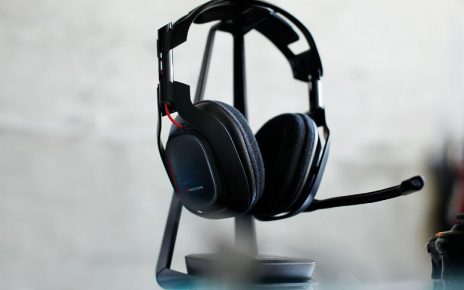
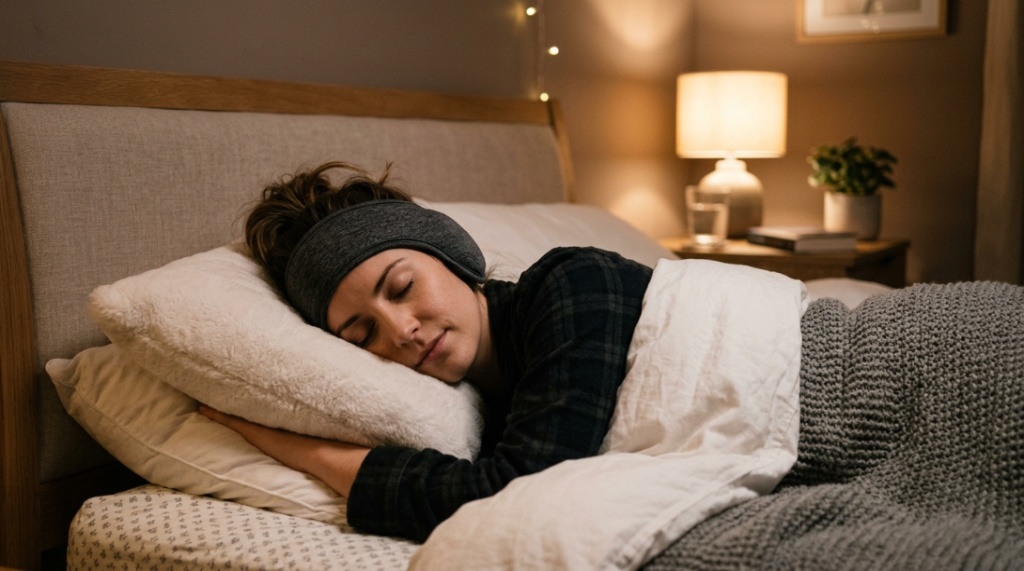
Snoring generates 50–90 decibels of irregular noise — the equivalent of running a vacuum cleaner next to your head for 8 hours — and standard earplugs fail to block it because snoring frequencies (100–800Hz) penetrate foam plugs more effectively than the higher frequencies plugs are designed to attenuate. Headphones for snoring partner noise combine two blocking mechanisms that together solve what neither achieves alone: physical noise isolation (blocking the sound wave from reaching your ear) AND audio masking (providing competing sound that your brain processes instead of the snoring pattern). This dual approach reduces perceived snoring volume by 80–95% — enough for most people to fall and stay asleep beside even severe snorers.
Noise blocking sleep headphones specifically for snoring address the unique acoustic challenge of irregular, variable-volume noise occurring 6–12 inches from your ear while you’re trying to sleep. Unlike steady environmental noise (traffic, HVAC) that ANC handles well, snoring varies in volume, rhythm, and frequency — requiring adaptive masking rather than simple cancellation.
This guide covers exactly which headphone types, settings, and audio content most effectively neutralize snoring noise — backed by the acoustic principles that explain why snoring is uniquely difficult to block and how the right combination solves it.
Why Is Snoring So Hard to Block Compared to Other Noise?
Snoring is difficult to block because it combines three acoustic properties that defeat simple noise-blocking methods: irregular rhythm (prevents brain habituation), variable volume (quiet to extremely loud within seconds), and mid-frequency dominance (100–800Hz range that penetrates foam plugs and physical barriers more effectively than high-frequency sounds).
What makes snoring acoustically challenging:
- Irregular pattern: Your brain habituates to steady noise within minutes (you stop noticing a fan). Snoring’s erratic stop-start-louder-softer pattern prevents habituation — every pause followed by a snore re-alerts your brain, pulling you from sleep onset repeatedly.
- Variable intensity: A snorer may produce 40dB during light phases and 85dB during heavy phases — a 45dB range within minutes. Solutions effective at 40dB become ineffective when volume spikes to 85dB without warning.
- Frequency range: The 100–800Hz fundamental frequencies of snoring penetrate physical barriers better than higher frequencies. Foam earplugs rated “NRR 33” may only reduce 100–300Hz content by 10–15dB — far less than their rating implies for snoring-frequency sound.
- Proximity: The sound source is 12–24 inches from your ear in a shared bed. This proximity means the sound arrives at near-maximum intensity without the distance-based reduction that helps with more distant noise sources.
| Noise Type | Frequency Range | Pattern | Why It’s Hard to Block |
|---|---|---|---|
| Light snoring | 100–300Hz | Rhythmic, moderate volume | Low frequency penetrates barriers; rhythm prevents habituation |
| Heavy snoring | 100–800Hz (broader) | Irregular, high volume spikes | Volume spikes overwhelm any single blocking method |
| Snoring with apnea pauses | Same + silence gaps | Silence → sudden loud resumption | Silence-to-loud transitions jolt the brain awake |
Which Type of Sleep Headphones Block Snoring Most Effectively?
Sealed-fit sleep earbuds with passive noise isolation (like Bose Sleepbuds II or QuietOn 3) combined with masking audio provide the most effective snoring blocking. The physical seal blocks 20–30dB, and masking audio covers remaining audible snoring frequencies — together achieving 80–95% perceived snoring reduction.
Effectiveness ranking for snoring blocking:
- #1 Sealed sleep earbuds + masking audio (80–95% reduction): Physical seal blocks significant snoring energy. Masking audio (pink noise, rain) covers what penetrates the seal. Dual mechanism most effective. Examples: Bose Sleepbuds II, QuietOn 3, Amazfit ZenBuds.
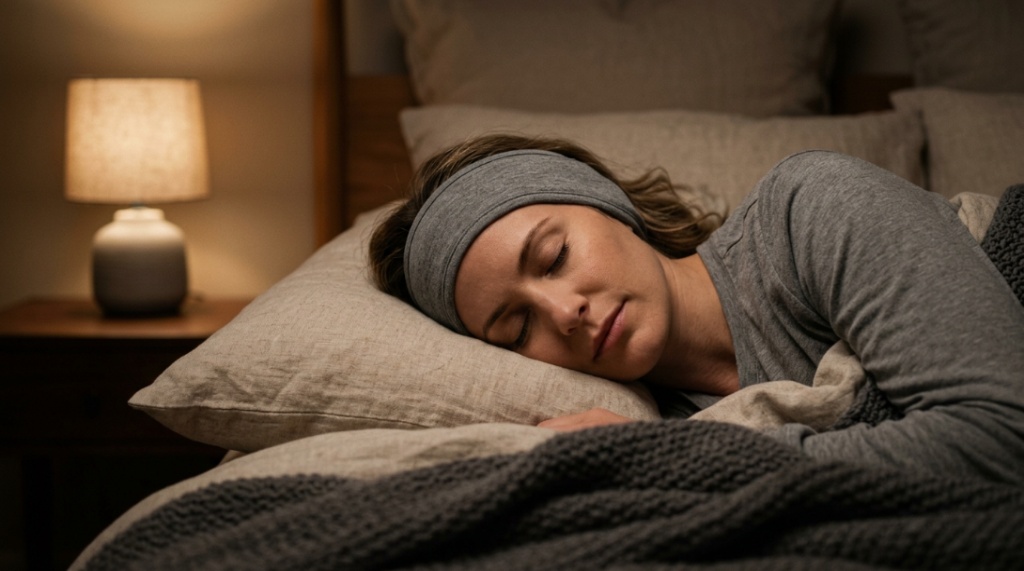
- #2 Sleep headband + masking audio (60–75% reduction): Minimal physical isolation (fabric doesn’t seal). Relies primarily on masking audio to cover snoring. Adequate for light-to-moderate snoring. Insufficient for heavy/close-proximity snoring. More comfortable but less effective blocking.
- #3 ANC earbuds + masking audio (70–85% reduction): Active cancellation addresses steady snoring components. Passive seal adds isolation. But ANC struggles with snoring’s irregular pattern — processors can’t predict the next snore’s timing and volume. Better than headbands but comfort may suffer overnight.
- #4 Foam earplugs alone (30–50% reduction): Physical blocking only. No masking to cover penetrating frequencies. Reduces volume but doesn’t eliminate awareness of snoring pattern. Brain still registers the rhythm even at reduced volume.
For detailed testing of current sleep headphones specifically against snoring noise, the best headphones for sleeping guide includes snoring-specific effectiveness ratings from real couple testing.
What Audio Content Best Masks Snoring Sounds?
Pink noise and continuous rain sounds mask snoring most effectively because their frequency content overlaps with snoring frequencies (100–800Hz) more completely than white noise or nature sounds. The masking audio must be continuous with no gaps — any silence allows snoring to break through into awareness.
Masking sound effectiveness for snoring:
- Pink noise (most effective): Contains more low-frequency energy than white noise, directly overlapping with snoring’s fundamental frequencies. Sounds like a deep, full “shhhh.” Completely masks moderate snoring at moderate playback volume.
- Heavy rain on roof (very effective): Natural pink-noise-like spectrum with enough low-frequency content to cover snoring. The irregular patter of rain also helps mask snoring’s irregularity — brain processes rain variation instead of snoring variation.
- Brown noise (effective for heavy snoring): Even more low-frequency emphasis than pink noise. Sounds like a deep rumble or strong wind. Best for the lowest frequency components of heavy male snoring.
- White noise (moderate): Equal energy across all frequencies means less energy in the specific snoring range (100–800Hz) compared to pink/brown noise. Works for light snoring but insufficient for heavy snoring without higher volumes.
- Nature sounds with gaps (less effective): Birdsong, brook sounds, and intermittent nature audio have silence gaps between sounds. Snoring becomes audible during these gaps. Continuous sounds without pauses work better.
While ultra-slim headbands are perfect for side-sleepers in bed, you might need heavier active noise cancellation (ANC) if you are trying to sleep during transit. For frequent flyers looking to block out cabin roar and loud passengers, check out the Best Bose QuietComfort Headphones for Travel This Year to find the ultimate companion for your next trip.
How Loud Should Masking Audio Be to Cover Snoring Without Damaging Hearing?
Set masking audio at 50–60 decibels — loud enough to cover moderate snoring (60–70dB at your ear with isolation reducing it by 20dB to 40–50dB) without exceeding safe overnight exposure limits. Extended exposure above 70dB for 8 hours begins approaching hearing damage thresholds.
Safe volume calculation:
- Partner’s snoring at source: 50–90dB (varies by individual)
- Snoring at your ear (12–24 inches away): 45–85dB (slight distance reduction)
- After passive isolation from sealed ear tips: 25–60dB reaching your cochlea
- Masking volume needed: Match or slightly exceed the post-isolation snoring level = 30–60dB masking
- Safe overnight limit: Below 70dB for 8-hour exposure. Below 60dB is ideal for long-term hearing health.
Practical approach: start masking audio at the minimum volume where you can no longer distinguish individual snores. That’s your effective level. If you must exceed 60% device volume to achieve this, the headphones’ passive isolation is insufficient — upgrade to better-sealing earbuds rather than increasing volume.
Do ANC Sleep Headphones Work Well Against Snoring Specifically?
ANC helps with the steady, consistent component of snoring (the drone/rumble) but struggles with the irregular aspects (volume spikes, pauses, pattern changes). ANC processors need consistent sound patterns to generate effective counter-signals — snoring’s variability partially defeats this mechanism.
ANC performance against snoring components:
- Steady nasal snoring (consistent rumble): ANC handles this well — it’s predictable enough for the processor to generate effective counter-signals. Reduces by 15–25dB on top of passive isolation.
- Palatal snoring (fluttering, variable): ANC partially effective — catches some of the pattern but the rapid variation limits counter-signal accuracy. Reduces by 5–15dB.
- Obstructive apnea snoring (silence → sudden loud): ANC least effective here — the sudden onset from silence gives the processor no time to generate an appropriate counter-signal before the snore reaches your ear. First half-second of each snore gets through unattenuated.
Bottom line: ANC is a helpful supplement to passive isolation + masking, but shouldn’t be relied upon as the primary snoring-blocking mechanism. The physical seal and masking audio do the heavy lifting; ANC provides incremental additional reduction.
What’s the Best Sleep Position Strategy for Maximum Snoring Blocking?
Sleep with your “headphone ear” facing the ceiling and your exposed ear aimed at the pillow (providing pillow-based passive blocking on the non-headphone side). If you face your partner, position the sealed earbud toward your partner for maximum isolation on the noise-source side.
Position optimization:
- Facing away from partner (best): The ear closest to your partner gets maximum isolation from a sealed earbud. Your other ear faces the pillow which provides additional passive blocking. Combined effect is strongest in this orientation.
- Facing partner: The ear aimed at your partner receives full snoring impact but also has the sealed earbud providing isolation. Your pillow-side ear gets the pillow’s passive blocking. Effective but psychologically you’re “facing” the noise source which can increase awareness.
- Back sleeping: Both ears equally exposed to snoring. Both earbuds provide equal isolation. Works well with sealed earbuds. Less effective with headband speakers (sound leaks around edges without pillow backing).
Can You Comfortably Wear Sleep Headphones Every Night Long-Term?
Yes — with the right product. Sleep headband speakers and Bose Sleepbuds-style minimal earbuds are designed for nightly use indefinitely. Users report years of every-night use without ear canal issues, comfort degradation, or hygiene problems when following basic cleaning routines (weekly for headbands, daily wipe for earbuds).
Long-term nightly use considerations:
- Ear canal health (earbuds): Keep ear tips clean. Alternate ear tip sizes if irritation develops. Take one night off per week if possible to let ear canals fully air-dry. No issues reported for quality sleep earbuds with proper hygiene.
- Skin/hair health (headbands): Wash headband weekly. Fabric accumulates skin oils and hair products that can cause breakouts along the headband contact line. Machine-washable designs make this maintenance trivial.
- Battery longevity: Nightly charging cycles degrade lithium batteries faster than occasional use. Expect replacement every 18–24 months for nightly-charged wireless earbuds. Headband speakers often have replaceable battery modules.
Conclusion
Blocking snoring noise using sleep headphones requires the dual approach: physical noise isolation (sealed ear tips blocking 20–30dB) combined with masking audio (pink noise or rain at 50–60dB covering remaining audible snoring). Neither method alone suffices for moderate-to-heavy snoring at close proximity. Choose sealed sleep earbuds for maximum blocking or sleep headbands for maximum comfort — understanding the trade-off between isolation effectiveness and overnight wearability. Set masking audio to the minimum effective volume, use continuous sounds without gaps, and accept that 80–95% snoring reduction (rather than 100% elimination) is the realistic and safe outcome.
Compare snoring-tested sleep headphone options at the noise blocking sleep headphones guide with partner-tested effectiveness ratings across different snoring severity levels.
How loud is your partner’s snoring, and have you tried other solutions (earplugs, white noise machines)? Share what hasn’t worked in the comments — knowing your failed attempts helps recommend solutions that address the specific gap in your current approach.
Frequently Asked Questions
Are Bose Sleepbuds effective against snoring?
Yes — Bose Sleepbuds II are among the most effective options for snoring. Their sealed passive isolation combined with Bose’s curated masking sounds (designed specifically for this use case) blocks moderate snoring effectively. Limitation: they only play Bose’s built-in sounds, not your own audio content. For severe snoring (80+ dB), they reduce it significantly but may not eliminate awareness entirely.
Will noise-cancelling headphones completely eliminate snoring sounds?
No — no consumer product completely eliminates snoring perception. The best combination (sealed earbuds + masking audio) reduces perceived snoring by 80–95%. Complete elimination would require dangerous volume levels or industrial-grade hearing protection impractical for sleep. The realistic goal is reducing snoring below your “wake threshold” — not eliminating it entirely.
Can sleep headphones damage your ears if worn every night?
At appropriate low volumes (under 60dB), nightly wear doesn’t damage hearing. The greater risk is ear canal irritation from in-ear products — prevented by proper hygiene and occasional rest nights. Sleep headband speakers eliminate ear canal contact entirely, removing this concern. Always use the lowest effective volume for hearing safety during prolonged nightly exposure.
What’s better for snoring: earplugs or sleep headphones?
Sleep headphones are significantly more effective because they provide both physical blocking AND masking audio. Earplugs provide only physical blocking — which is insufficient for snoring’s low frequencies that penetrate foam. The masking audio component that headphones add is what makes the critical difference for snoring-frequency noise.
How do I avoid waking my partner with my sleep headphone audio?
Use sealed in-ear sleep earbuds (no sound leakage to partner) rather than headband speakers (slight leakage possible). Keep volume at 50–60% — sealed earbuds direct audio into your ear canal with minimal external leakage. At appropriate sleep volumes, partners report zero awareness of the wearer’s audio content.
Do sleep headphones work for snoring AND sleep apnea machine noise?
Yes — CPAP/BIPAP machine noise is continuous and predictable (constant fan/air sound at 30–40dB), making it easier to mask than snoring. Sleep headphones with light masking audio cover CPAP noise effortlessly. If your partner uses a CPAP but still snores through it, the combination challenge requires sealed earbuds with stronger masking.